Why a Small Creative Habit Needs a Place to Begin
A small creative habit becomes easier to start when its tools and next action are ready, so you can make something in an ordinary pause without a rigid schedule.
The common mistake with a small creative habit is waiting for a clear stretch of free time before beginning. That wait costs the ordinary minutes in which a sketch, a few stitches, or a line of writing could take shape. Instead of tying the activity to a perfect opening, give it a place where the next move is already apparent.
Choose a moment that leaves room for making
Look for a transition with a natural pause: sitting down after changing clothes, waiting for tea to cool, or putting away the dishes. The moment should leave enough attention for the activity. Carrying groceries through the door, for instance, may be a poor fit even if it happens reliably.
Think of the cue as an invitation, not an order. After making tea, you might write one sentence if the pause feels available. If tea is skipped or the afternoon changes course, the activity has not been missed; another opening can do.
This distinction matters because creative work has its own kinds of beginnings. A line of writing can start in a notebook beside a chair. A sewing project may need a clear table and decent light. Choose a moment that suits the actual work, rather than trying to squeeze every pastime into the same routine.
Set out the next move, not an entire studio
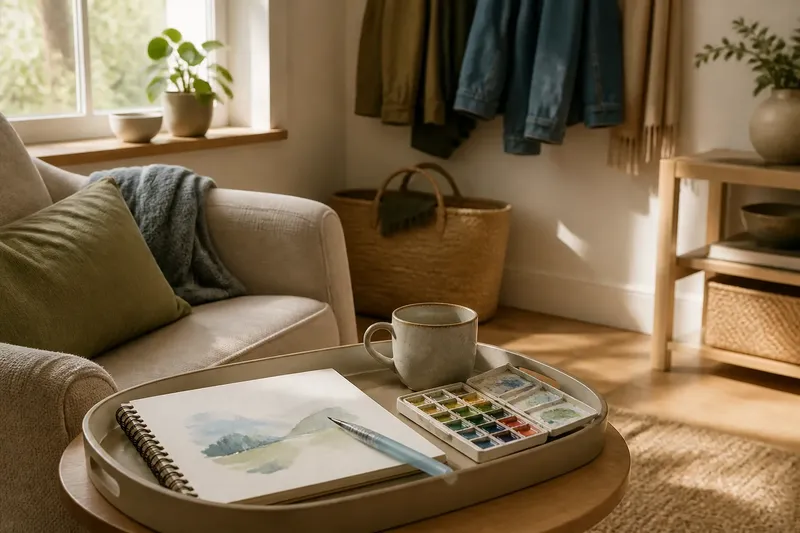
A starting place can be a shallow tray on a side table, a notebook beside the sofa, or a basket under a chair. Its purpose is to keep the first useful action within reach. For mending, that might mean a garment, a needle case, thread in a likely color, and small scissors. For drawing, it could be a sketchbook and pencil.
Keep the setup small enough to put away without a separate cleanup session. A handled tray, zip pouch, or lidded box can gather the project when a shared table is needed. Put the tools for the next move where you can see them; store supplies that are not needed yet nearby.
It is not worth arranging a corner to resemble a finished craft room. Matching containers and elaborate labels can wait. If the pencil is buried under unrelated supplies, the arrangement is not helping; make the one tool you need easier to reach.
Make the first action definite and easy to resume
Choose a beginning with a clear edge: make one mark, sew on one loose button, shape a small piece of clay, or read the last note you left yourself before continuing a knitting row. The aim is to begin, not to finish an object or earn credit for a session.
Before putting the work away, leave a useful trace of what comes next. Rest a pencil by the next blank space, secure the thread, or write a short note such as “add the blue stripe.” That handoff lets you return without reconstructing your thinking from scratch.
Say you want to keep a watercolor sketchbook but rarely open it after work. You set a sketchbook, water brush, and small palette on a tray beside the chair where you sit after changing clothes. When you sit down, you make one loose shape on the next page; if dinner interrupts, you close the book and return the tray to its shelf. The result is a page with a clear starting mark and a setup that can be resumed without clearing the table.
A brief start may grow into a longer session, or it may be all that fits. Either way, the work remains available without a quota or a need to make up for a missed day.
Let the arrangement change with the room
A useful place is one the household can live with. For a shared table, agree on what can stay out and what must travel. A basket or pouch gives a project a temporary home, while a familiar return point—a shelf, drawer, or hook—keeps it from migrating around the room.
If the usual chair becomes a mail-sorting spot, move the project rather than treating the change as a failure. You might shift the tray to a shelf near another chair, then use the next quiet pause there. The work can adapt without preserving the old routine exactly.
Some activities need more attention or safer storage than a passing moment allows. A project with small parts, wet materials, or a longer setup may belong behind a closed door or in a dedicated session after the room is quiet. Fit the opening to the activity and the people who share the space.
When should you change the cue or setup?
What if the cue is easy to forget?
Put the project where the cue happens, such as a notebook beside the chair where you take off your shoes. If the reminder fades into the background, move the materials closer to the action instead of adding more alerts.
Does a small creative habit need to happen every day?
No. Let the activity fit the rhythm that suits it. A cue can offer an opening when it occurs; it does not have to create a daily quota or a debt after a missed day.
What if starting still feels like too much?
Make the first move smaller and remove one obstacle. Open the sketchbook, choose the thread, or place the clay on the work surface, then decide whether continuing feels welcome.
How can the habit travel or survive a changed routine?
Pack a portable version of the first move, such as a pocket notebook or a small yarn project, if that suits the activity. When the usual cue is absent, attach it to another transition that already happens rather than trying to recreate the old routine.
Keep a small creative habit ready to begin
Notice what makes your chosen start possible: the tool is visible, the next move is clear, and the materials can be put away without fuss. If one of those conditions keeps getting in the way, change the cue or the arrangement. A small creative habit needs neither a protected hour nor a perfect corner; it needs a beginning that fits the life already happening.
Let the setup stay ordinary. A tray can move, a notebook can close, and an unfinished piece can wait without turning into a promise you owe yourself. When the next pause arrives, a ready beginning is often enough to make the work feel within reach.