A Rainy Afternoon with a Deck of Cards
Plan a rainy afternoon with a deck of cards that welcomes late arrivals, keeps rules clear, and leaves room to change games when the table’s mood shifts.
The usual mistake with a rainy afternoon with a deck of cards is picking a game before deciding how people will come and go. If a round runs long or a player arrives halfway through, the table can stall while everyone negotiates a seat. Choose a game with natural stopping points, and agree on how those points work before dealing.
Choose a card game that fits the group’s rhythm
Think about how many people are likely to sit down, whether they know the game, and how much attention they want to give it. A game with short, separate hands makes it easier to pause than one that depends on a long sequence. Rules and preferences vary, so treat familiar game names as possibilities rather than promises of an easy fit.
Gin Rummy may suit a small group that enjoys planning a few moves ahead. Crazy Eights may suit a group that prefers matching cards and learning as it plays, though some players will want a different pace or more strategic choices. For a group that keeps changing size, consider a shedding game in which players match a rank or suit; agree on a version first, since house rules can differ.
Keep a second option in reserve, not a long menu. One standard deck can support several familiar games, so there is no need to set out extra supplies before you know what the group wants. If no one can agree, begin with a short hand of a game people already know.
Arrange the table around the way people will use it
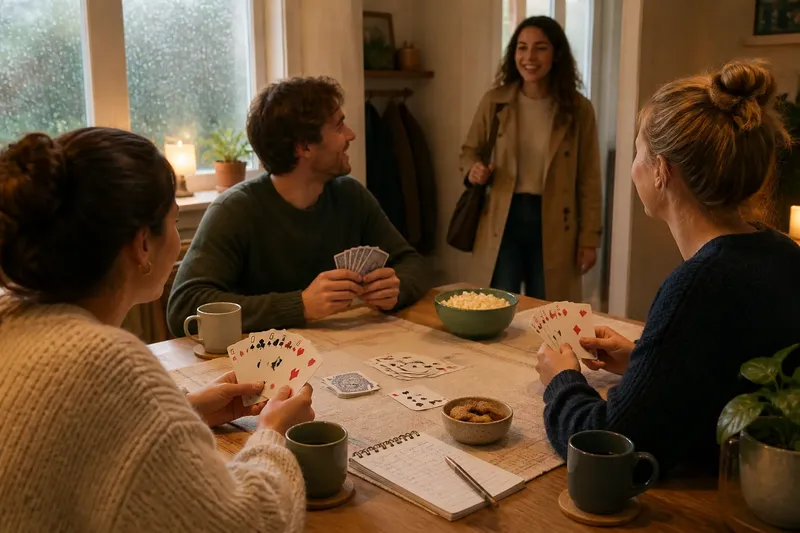
Clear a patch of the kitchen or dining table and leave room for elbows, mugs, and a chair pulled slightly aside. Put the deck and any score note together. Keep drinks and snacks beyond the dealing area, especially if people tend to reach across the table while talking.
A plain cloth can help cards stand out on a glossy or busy surface, but it is not essential. If a pet tends to investigate objects left out, choose a higher surface or put the deck away between hands. A chair at the edge gives someone a place to watch without making a decision about playing right away.
Keep music low enough that players can ask whose turn it is without raising their voices. There is little value in arranging elaborate decorations or a themed menu unless those details genuinely please the people coming; they can turn a casual visit into an obligation.
Teach the game at the pace of the first hand
Before dealing, explain the aim, the order of play, and the rule most likely to cause confusion. Then show a practice turn or begin with an unhurried hand. A few visible choices often make more sense than a long recital of rules.
Settle small procedural questions while the deck is still on the table: may players ask for reminders, what happens if a card is exposed by accident, and where is a sensible point to pause for a phone call? Keep the answers simple. The point is to make play understandable, not to turn a rainy afternoon into a tournament.
Imagine four friends are expected, one may arrive late, and another has time for only a short visit. The group chooses a familiar matching game and agrees that each hand stands alone. They play one hand while waiting; when the late guest arrives, they finish the current hand, explain the matching rule with the cards in view, and deal again. The tradeoff is that the newcomer waits briefly, but nobody has to interrupt a turn or rebuild a game in progress.
Make late arrivals part of the plan
For games built from separate hands, invite a newcomer into the next deal. If the game has a longer sequence, let the person watch until the current round ends. A clear boundary is easier to understand than changing rules mid-hand.
Keep the game name and any house rules in a phone note or on a small card beside the deck. This is useful when the group plays infrequently or uses its own version. Give a short explanation while players gather the cards rather than asking the whole table to stop in the middle of a turn.
If a game needs fixed teams or a particular number of players, decide whether someone can deal, keep score, or sit out one hand and take the next opening. If those roles would feel awkward, let the newcomer watch and chat until a seat opens. There is no need to make every arrival fit immediately.
Use a short pre-deal check to prevent awkward pauses
- Check who is present and who may arrive later; if the group is still changing, choose a game with separate hands, or wait for a natural pause before starting a longer game.
- Check whether everyone knows the proposed game; if several people are new to it, choose a familiar alternative or demonstrate a practice turn before scoring matters.
- Check how many players the chosen version can accommodate; if the head count does not fit, pick another game or agree that someone will deal, keep score, or sit out a hand.
- Check the likely length of a hand against the time people have; if someone must leave soon, play one short hand or choose a game that can stop cleanly between rounds.
- Check the table for drinks, loose papers, and enough elbow room; if the dealing space is crowded, move the cups and clear a smaller playing area before shuffling.
- Check that players agree on the house rules most likely to prompt questions; if they do not, use the familiar rule set or settle the disputed detail before the first deal.
How do you keep play flexible without losing its shape?
Which card game works for a mixed group?
Choose a game whose rules the group can learn at the table and whose hands end at clear points. Crazy Eights may work for players who enjoy matching cards, while Gin Rummy may fit a group that welcomes more planning; preferences and house rules vary.
How can someone join after the game starts?
Agree on an entry point before dealing, such as the next hand or the end of the current round. Keep the explanation brief and show the relevant choices with the cards rather than restarting play.
What belongs on the table?
Keep the deck, any score note, and a clear playing area within reach. Move drinks and snacks away from the dealing space so reaching for them does not disturb the cards.
What should you do if the group loses interest?
Ask whether players want to finish the hand, switch games, or put the deck aside. If conversation has taken over, let it; the cards do not have to occupy the whole visit.
Let the afternoon change course naturally
Start with a manageable game, take a pause when people reach for another drink, and decide together whether to continue or switch. If everyone is absorbed, keep playing. If turns grow slow and conversation takes over, finish at a natural stopping point and leave the deck on the table or put it away.
A rainy afternoon with a deck of cards needs a clear place to begin, not a schedule to obey. A game with separate hands, a visible rule reminder, and an agreed way to welcome late arrivals can make the gathering easier to share. The most useful adjustment may be simply to stop dealing when the table has found something better to talk about.